

Why Freshly Roasted Coffee Tastes Better Than Old Beans
Last Updated: November 2, 2026
Quick Summary
Fresh roasted coffee tastes better because the aromatic compounds and coffee oils created during roasting slowly escape or oxidize after the beans cool. Beans are generally at their best within roughly two to four weeks of roasting, so checking the roast date matters.
- Roasting creates hundreds of aromatic compounds, and the bean starts losing them as soon as it cools.
- Degassing releases carbon dioxide after roasting, and aroma and oils drift away as beans age.
- Coffee oils oxidize over time, turning bright, complex flavors stale, woody, or cardboard-like.
- Days 4 to 14 after roasting is often the sweet spot for flavor and balance.
- Check for a clear roast date rather than relying on a best-by date, which can be months after roasting.
Table of Contents
- What Happens to Coffee Beans After They Are Roasted
- Why Fresh Roasted Coffee Has More Flavor Complexity
- How Long Coffee Beans Stay Fresh After Roasting
- How Long to Rest Coffee After Roasting Before Brewing
- How to Store Coffee Beans to Protect Freshness
- How to Check the Roast Date and Judge Freshness When Buying
- The Best Way to Brew Fresh Coffee to Taste the Difference
- Booking Your Next Fresh-Roasted Order with Elegance by LadyKath
- Frequently Asked Questions
What Happens to Coffee Beans After They Are Roasted
Roasting is the moment a green coffee bean turns brown and develops its flavor. Heat drives sugars and proteins to react, creating hundreds of aromatic compounds. The bean then begins to lose those compounds the moment it cools.
How roasting changes the bean
During roasting, the bean expands and builds up gas, mostly carbon dioxide. Once it leaves the roaster, that gas starts to escape. This process is called degassing.
Degassing matters because the bean's flavor and aroma are tied to the gas and the oils inside it. As the bean ages, those compounds drift away. The result is a flatter cup.
Why aroma and coffee oils matter for flavor
Coffee oils carry much of the aroma that makes coffee smell rich. Those oils sit on the surface of the bean and react with air over time.
Fresh beans have oils that taste bright and complex. Older beans often taste stale, woody, or cardboard-like. Think of it like a cut apple that turns brown: the change is gradual, but you notice it.
Why Fresh Roasted Coffee Has More Flavor Complexity
Fresh roasted coffee tastes layered because the compounds that create aroma and flavor are still present in meaningful amounts. Older coffee tends to taste one-dimensional not because it has fewer origin characteristics, but because the volatile molecules that carry those characteristics have escaped or broken down.
Several factors drive this difference:
- Volatile compounds: Fresh beans hold more aromatic molecules that shape the taste. Many of these compounds are sensitive to oxygen, heat, and light, and they diminish steadily after roasting.
- Coffee oils: Intact oils add body and a smoother mouthfeel. Once oils migrate to the bean surface and oxidize, they contribute stale or rancid notes instead of richness.
- Balanced acidity: Fresh beans keep bright acidity that older beans lose. The acids themselves do not vanish overnight, but the aromatic compounds that make acidity taste lively fade faster than the acids do.
A common pattern is that the gap between fresh and older coffee is easiest to detect in the aroma and the finish rather than the first sip.
A controlled taste comparison you can run at home
Vague claims about freshness are easy to make and hard to verify. A simple side-by-side test turns the question into something you can taste for yourself.
- Use the same coffee. Buy two bags of the same origin, roast level, and lot from the same roaster, ideally roasted on different dates. If you cannot get two roast dates of the same lot, use one bag roasted within the past week and one bag that is at least four to six weeks old.
- Keep the grind, dose, water, and brew method identical. Weigh the beans on a kitchen scale, grind on the same setting, use the same water temperature, and brew the same volume. Changing two variables at once makes the result unreadable.
- Brew both cups back to back. Taste them blind if possible, have someone else label the cups A and B so your expectation does not bias the result.
- Score four attributes on a simple scale. Rate aroma, sweetness, body, and finish from 1 to 5 for each cup. Write the scores down before you discuss them.
- Compare the finish last. The finish is often where the difference is largest. Note whether the flavor fades quickly or lingers.
Watch out: if the older bag was stored in a clear jar near a stove or in a warm cabinet, you are testing storage as much as age, and the comparison will overstate the effect of time alone.
How Long Coffee Beans Stay Fresh After Roasting
Coffee does not go bad in a day, but its peak window is short.
A practical freshness timeline after roasting
- Days 1 to 3: Beans are still releasing a lot of carbon dioxide. Many coffees taste best after a short rest.
- Days 4 to 14: Often the sweet spot for flavor and balance.
- Weeks 3 to 4: Flavor starts to fade, though the coffee is still pleasant.
- After one month: Aroma and oils have faded noticeably. Expect a flatter cup.
These windows vary by roast level and bean type. Lighter roasts tend to hold their flavor a bit longer and show their character more clearly, while darker roasts can taste stale sooner because their oils come to the surface faster.
The freshness window is easier to plan around when you can see the stages at a glance.
| Stage after roasting | Typical timing | What to expect |
|---|---|---|
| Days 1 to 3 | First few days | Still releasing lots of carbon dioxide; a short rest often helps |
| Days 4 to 14 | About 4 to 14 days | Often the sweet spot for flavor and balance |
| Weeks 3 to 4 | About 3 to 4 weeks | Flavor starts to fade but still pleasant |
| After one month | Beyond 1 month | Aroma and oils noticeably faded; flatter cup |
How Long to Rest Coffee After Roasting Before Brewing
Resting means letting freshly roasted beans sit for a short period before you brew. This lets excess carbon dioxide escape so the coffee extracts more evenly.
A common approach for many coffees is to wait about 3 to 7 days after roasting. Very fresh beans, especially darker roasts, can taste sharp or gassy if brewed too early. Ask your roaster for their recommended rest period, since it varies by coffee.
How to Store Coffee Beans to Protect Freshness
Storage affects how long your beans keep their flavor. The main enemies are air, light, heat, and moisture.
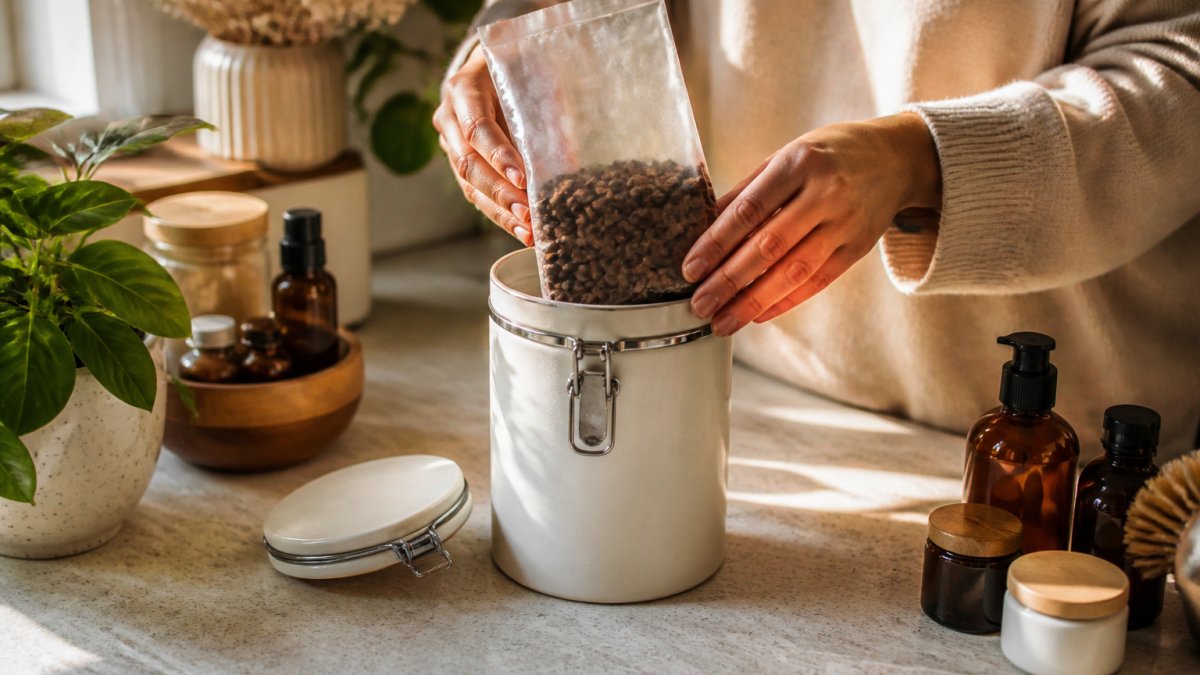
Storage methods and their trade-offs
- Original bag with a one-way valve: Convenient and keeps air out well for a few weeks. Once opened, the seal weakens.
- Airtight canister: Good for daily use. Keep it in a cool, dark cabinet away from the stove.
- Freezer: Helps preserve beans longer. Portion them into small bags so you thaw only what you need, and avoid repeated freezing and thawing.
- Clear jar on the counter: Looks nice but exposes beans to light and heat. Use it only for beans you will finish quickly.
Avoid the refrigerator for everyday storage. Condensation can form when beans come out of the cold, and moisture hurts flavor.
How to Check the Roast Date and Judge Freshness When Buying
The roast date is the most useful number on a bag, and it is the one detail most shoppers never check. A roast date tells you when the clock started on flavor loss. A best-by date tells you almost nothing about freshness, because it is set by the seller and can be months after roasting.
How to tell a roast date from a best-by date
Read the label language carefully. A roast date is usually printed as a specific calendar date near words like "Roasted on" or "Roast date." A best-by date is typically paired with "Best by," "Best before," or "Enjoy by" and is often a month or more in the future.
A common pattern among roasters who prioritize freshness is to print the roast date as a stamped or handwritten date on the back or bottom of the bag, sometimes with a lot code. If the date is missing or illegible, that is itself useful information.
What to check on the bag before you buy
- A clear roast date within the last few weeks. For most coffees, whole beans are at their best within roughly two to four weeks of roasting, though the window varies by roast level.
- A one-way degassing valve. This small valve lets carbon dioxide escape without letting oxygen in. Its presence is a signal that the roaster expects the beans to keep releasing gas, which is normal in the first days and weeks after roasting.
- Whole beans rather than pre-ground. Grinding exposes far more surface area to oxygen, so pre-ground coffee loses aroma much faster than whole bean.
- Even color and a slight sheen. Beans should look consistent, with a light oil sheen on darker roasts. Very oily, dull, or unevenly colored beans can indicate age or inconsistent roasting.
When the bag gives you nothing
If a bag has no roast date, no lot code, and no clear statement about when it was roasted, you are buying on faith.
Watch out: a "best by" date far in the future is not evidence of freshness. It is a shelf-life estimate, and it can be printed on coffee that was roasted months earlier.
Judging freshness at the point of sale is a skill, not a guess.
The Best Way to Brew Fresh Coffee to Taste the Difference
Good brewing lets the flavor of fresh beans shine. Small changes make a big difference.
- Grind just before brewing. Pre-ground coffee loses aroma quickly. A burr grinder gives the most even results.
- Use the right grind size. Pour-over and drip coffee usually need a medium grind. Finer grinds suit espresso, and coarser grinds suit French press.
- Heat water to about 195 to 205 degrees Fahrenheit. Water that is too cool under-extracts, and water that is too hot can taste harsh.
- A 1-to-16 ratio is a common starting point. That means about 1 gram of coffee for every 16 grams of water. Adjust to taste.
- Taste and adjust. If the cup tastes sour, grind finer or brew longer. If it tastes bitter, grind coarser or brew a bit shorter.
Fresh coffee rewards careful brewing, so take a few minutes to dial in your method.
Booking Your Next Fresh-Roasted Order with Elegance by LadyKath
Freshness is the easiest way to taste the difference, and it starts with buying beans that were roasted recently. At Elegance by LadyKath: Beans & Botanicals, we focus on thoughtfully sourced coffee. Pricing depends on quantity, size, and delivery, so visit our website for current prices and options. Shop now to bring fresh-roasted flavor to your morning cup. Browse organic fresh-roasted coffee beans and order online to see current options.
Frequently Asked Questions
Why does freshly roasted coffee taste better?
Freshly roasted coffee keeps its aromatic volatile compounds and natural oils, which carry most of the flavor you taste and smell. As beans age, those compounds escape and oxidize, so the cup tastes flatter and sometimes stale. Fresh beans also produce a richer aroma and a more layered flavor profile, which is why the difference shows up even in a simple drip cup. Buying in smaller quantities and grinding just before brewing helps you keep that freshness.
How long do coffee beans stay fresh after roasting?
Most roasters suggest coffee tastes best roughly between 3 and 14 days after roasting, though the exact window depends on the roast level and bean type. Darker roasts often peak sooner than lighter roasts. Beans kept beyond several weeks still work for brewing but lose aroma and body steadily. Checking the roast date on the bag is the fastest way to know where your beans stand.
How soon after roasting should you brew coffee?
Many roasters recommend waiting several days after roasting before brewing, because freshly roasted beans release carbon dioxide during degassing. That gas can make extraction uneven and cause a sour or flat taste if you brew too early. Waiting until the beans have rested, typically a few days for most roasts, usually gives a smoother and more balanced cup. Brew within a few weeks of the roast date for the best result.
How should you store fresh-roasted coffee beans?
Store whole beans in an airtight, opaque container at room temperature, away from heat, light, and moisture. Avoid the refrigerator and freezer for everyday use, since condensation can form when you open a cold container. Keep beans in their original bag only if it has a one-way valve, and transfer them to a sealed canister once opened. Grind just before brewing to preserve aroma.
