

Is It Worth Buying Organic Loose Leaf Tea Online?
Last Updated: October 26, 2026
Quick Summary
Buying organic loose leaf tea online is worth it because specialist sellers ship fresher whole-leaf harvests and show full certification details a grocery shelf rarely reveals. Check that the listing names the certifying body and shows the USDA Organic seal before you order.
- Organic loose leaf tea is grown without synthetic pesticides or fertilizers and processed under a certification program that verifies those claims.
- Only products that are at least 95% certified organic may carry the USDA Organic seal.
- A 100 g pack of whole-leaf tea typically brews 40 to 50 cups at one teaspoon per cup.
- Steep green tea in water around 160 to 175°F for 1 to 3 minutes to avoid bitterness.
- Store tea in an opaque, airtight tin in a cool cupboard away from light and strong smells.
Table of Contents
- Why Buy Organic Loose Leaf Tea Online Instead of in a Store
- How to Verify Organic Certification Before You Order
- Finding the Best Organic Loose Leaf Tea for Your Taste
- Organic Loose Leaf Tea Brands: What Separates the Good from the Rest
- Price, Pack Size, and Value: Comparing What You Actually Get
- A Loose Leaf Tea Steeping Guide by Tea Type
- How to Store Loose Leaf Tea So It Stays Fresh
- Choosing Your First Organic Loose Leaf Tea Order
- Frequently Asked Questions
Why Buy Organic Loose Leaf Tea Online Instead of in a Store
Shopping for organic loose leaf tea online gives you fresher harvests, more variety, and certification details a grocery shelf rarely shows.
Conventionally farmed tea can carry residues from synthetic pesticides and fertilizers, which is why many buyers now search for certified organic options.
Buying online also lets you compare pack sizes, read harvest notes, and check certification before checkout.
How to Verify Organic Certification Before You Order
Verification comes down to one habit: ask for the certifier's name, not just the word "organic." A legitimate seller can show the seal and name the certifying body.
In the United States, the USDA National Organic Program sets the rules for "certified organic," and products with the USDA Organic seal must meet those standards.
What the Label Tiers Actually Mean
Organic labeling is not one word; it is a scale, and the scale is where shoppers get fooled.
- "100% Organic": Every ingredient is certified organic (excluding water and salt); may carry the USDA Organic seal.
- "Organic": At least 95% of ingredients by weight are certified organic; may carry the USDA Organic seal.
- "Made with Organic Ingredients": At least 70% of ingredients are certified organic; may NOT carry the USDA Organic seal.
For a single-ingredient loose leaf tea, ask whether the leaf itself is certified or the blend is only partly organic. A 95%-organic blend can legally contain up to 5% non-organic flavoring or botanical.
Who Certifies, and How to Check the Certificate
Certification is carried out by USDA-accredited certifying agents such as Oregon Tilth, CCOF, and Ecocert, not by the USDA directly. Ask the seller for the certifier's name and certificate: a real certificate lists the certified operation, products covered, and an effective date. If they cannot produce it, the claim is unverified.
The Pre-Order Checklist
- Does the product page name the certifying body?
- Is the USDA Organic seal visible on the packaging or listing?
- Does the description name the tea-growing region?
Certification is a paper trail, not a badge. The certifier's name, the label tier, and a certificate you can request separate verified organic leaf from a word on a box.
Finding the Best Organic Loose Leaf Tea for Your Taste
The best organic loose leaf tea matches how you drink it: bold and malty for milk drinkers, light and grassy for black-coffee converts, floral and caffeine-free for evenings. Start with the type, then narrow by region and blend.
Black, Green, White, Oolong, and Herbal: What Each Type Delivers
Each tea type comes from the same plant, but processing changes flavor, caffeine, and brewing.
- Black tea: Fully oxidized, strong and malty. Best for morning cups and milk.
- Green tea: Unoxidized, grassy and fresh. Sencha is a classic example.
- White tea: Minimally processed, delicate and floral. Forgiving and light.
Building a first order? Pick two: one black or oolong for mornings, one green or white for afternoons, and an herbal tisane for a caffeine-free evening ritual.
Organic Loose Leaf Tea Brands: What Separates the Good from the Rest
The best organic loose leaf tea brands share four traits: named certification, stated origin, recent packing dates, and honest ingredient lists. Everything else is packaging.
Sourcing, Blends, and Wellness Blends Worth Knowing
Sourcing is where quality is won or lost. A brand that names its tea-growing regions and describes sustainable sourcing, Fair Trade relationships, and hand-blended batches knows where its leaf comes from.
Blends deserve the same scrutiny: flavored teas and wellness blends can hide low-grade leaf behind added flavor, so read the ingredient list.
At Elegance by LadyKath: Beans & Botanicals, our organic tea collection is built on organically sourced botanicals and whole-leaf teas, chosen so the leaf itself carries the cup.
Price, Pack Size, and Value: Comparing What You Actually Get
Value in loose leaf tea is not the sticker price. It is cost per cup, which depends on pack size, leaf grade, and how many times you can re-steep the leaves. Here is how to do the math.
The Cost-Per-Cup Formula
A standard teaspoon of loose leaf is roughly 2 to 3 grams, so a 100 g pack brews roughly 33 to 50 cups at one teaspoon per cup. Divide the pack price by that cup count for a real comparison number.
Pack Size |
Approx. Cups (1 tsp/cup) |
What to Watch |
|---|---|---|
50 g |
17 to 25 cups |
Good for sampling; highest cost per cup |
100 g |
33 to 50 cups |
The common sweet spot for a first full-size order |
250 g |
83 to 125 cups |
Lower cost per cup, but only if you will drink it within a few months |
500 g |
167 to 250 cups |
Best per-cup value; risk of stale leaf if stored poorly |
What Actually Drives the Price Up or Down
- Leaf grade: Whole leaf costs more than broken leaf or dust, but it steeps fuller, so the per-cup gap is smaller than the sticker gap.
- Harvest and season: First-flush and single-origin teas cost more than blends, and blends stretch a harvest across a larger pack.
- Certification: Certified organic leaf carries a real cost for the grower and handler, and that shows up in the price. It reflects quality and compliance, not a markup to avoid.
A Comparison Framework You Can Run in Five Minutes
- Note the pack price and gram weight.
- Convert to cups at 2 to 3 grams per cup.
- Divide price by cups for cost per cup.
- Adjust for re-steeps: a tea good for three infusions is about one-third the cost per cup of a one-steep tea.
- Check the harvest date; an old cheap pack is not cheaper per good cup.
Our advice: buy a smaller pack of a new tea first, confirm you love it, then move to the larger size. Check our current listings for exact pricing rather than guessing from another brand's shelf.
A Loose Leaf Tea Steeping Guide by Tea Type
Great loose leaf tea is mostly about water temperature and time. Get those two right and even a modest leaf tastes clean and sweet.
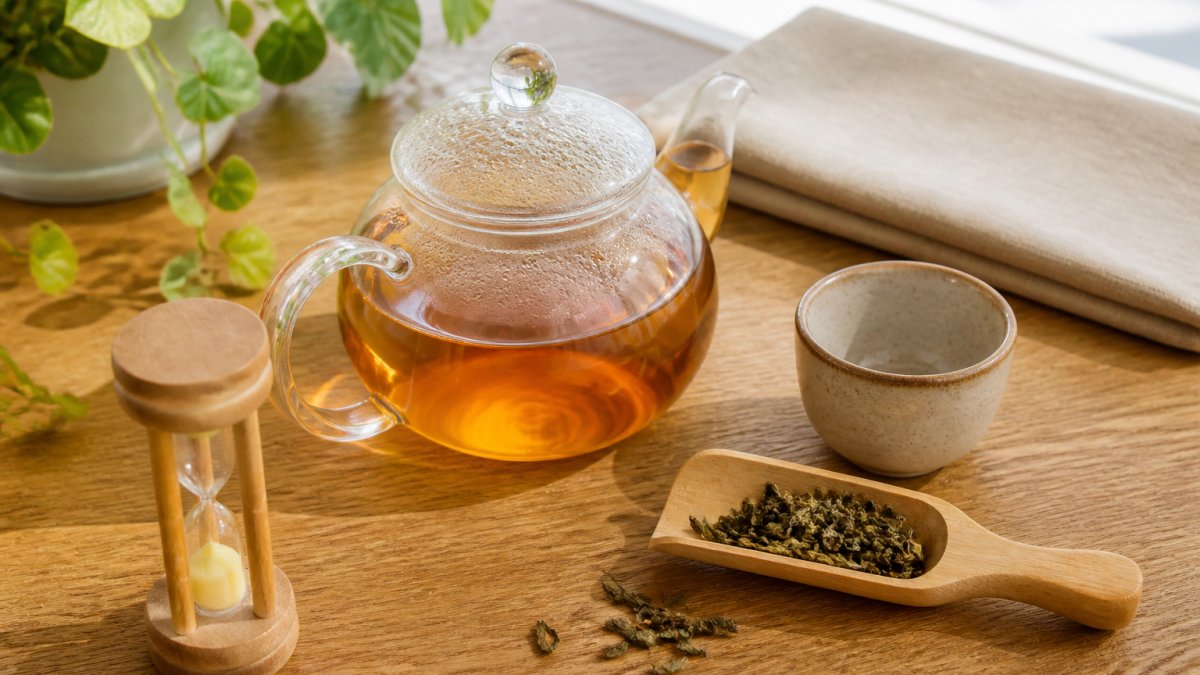
- Black tea: Water just off the boil, steep 3 to 5 minutes.
- Green tea: Cooler water, around 160 to 175°F, steep 1 to 3 minutes to avoid bitterness.
- White tea: Water around 175 to 185°F, steep 2 to 3 minutes.
Use roughly one teaspoon of loose tea per cup, more for large-leaf styles. Boiling water on green tea is the most common mistake we hear about, turning a delicate Sencha bitter in seconds.
How to Store Loose Leaf Tea So It Stays Fresh
Fresh tea needs three things: airtight containment, darkness, and distance from strong smells. Light, air, heat, and moisture all strip aroma from the leaf.
Keep your loose tea in an opaque, airtight tin or a sealed pouch, stored in a cool cupboard away from the stove.
Buy only what you'll drink within a few months. If you order a large pack, split it into a smaller tin for daily use and keep the rest sealed.
Choosing Your First Organic Loose Leaf Tea Order
Start small and specific: one black or oolong, one green or white, and one herbal tisane, each in a modest pack size. Confirm certification, check the harvest date, and note the steeping instructions before you brew.
If you'd rather skip the guesswork, our team at Elegance by LadyKath: Beans & Botanicals can help you build a first order around how you drink tea.
Frequently Asked Questions
What should you look for when buying organic tea online?
Check for a verifiable USDA organic seal and, where applicable, Fair Trade status. Confirm the harvest or roast date, since organic loose leaf tea loses aroma within months of opening, and compare price per 100 g for whole-leaf tea rather than dust and fannings.
Is loose leaf tea better than tea bags?
Loose-leaf tea gives leaves room to unfurl, releasing more aroma and flavor than the compacted dust in most tea bags, and you control the amount per cup. Tea bags are more convenient for travel and the office, but whole-leaf tea in an infuser delivers a fuller cup at home.
How should you store organic loose leaf tea to keep it fresh?
Keep it in an airtight, opaque container away from light, heat, and moisture, and well clear of coffee or spices, since tea absorbs odors quickly. Green tea and white tea are the most fragile and benefit most from a cool, dark cupboard.
How long should you steep green tea?
Green tea, including sencha, steeps best in water around 160 to 175°F for one to two minutes, since too much heat or time turns it bitter. Black tea and oolong tea handle water near boiling for three to five minutes, while white tea and herbal tisanes such as rooibos need four to six minutes.
The real challenge isn't finding tea to buy, it's finding a seller who shows the certification, the origin, and the packing date before you commit. That's the standard we hold at Elegance by LadyKath: Beans & Botanicals, with organically sourced botanicals and whole-leaf teas packed for freshness. Get started with Elegance by LadyKath: Beans & Botanicals and taste the difference a fresher leaf makes.
